Dr. Alok Gadkari

Scoliosis Treatment Pune – Dr. Alok Gadkari Comprehensive Scoliosis Treatment in Pune

Scoliosis is a structural spinal condition characterized by abnormal lateral curvature. Although mild curves may not cause immediate symptoms, progressive deformity can affect posture, mobility, and organ function. Therefore, timely scoliosis treatment in Pune becomes essential for long-term spinal health.

Dr. Alok Gadkari provides structured evaluation and evidence-based management for adolescent and adult scoliosis. Initially, many patients notice uneven shoulders or waist asymmetry. However, as curvature progresses, back pain and muscular imbalance may develop. Consequently, early specialist assessment prevents worsening deformity.

Through detailed examination and advanced imaging, Dr. Gadkari determines curve severity and spinal alignment. Based on curvature angle and skeletal maturity, he designs individualized treatment strategies.

Moreover, he integrates conservative management, bracing protocols, and surgical correction when necessary. As a result, patients receive comprehensive scoliosis care under one experienced spine specialist. Early diagnosis significantly improves long-term outcomes.
Scoliosis Treatment Pune – Dr. Alok Gadkari

Understanding the Causes of Scoliosis

Scoliosis develops from various underlying causes. Most commonly, adolescent idiopathic scoliosis appears without a clear origin during growth spurts. Additionally, congenital scoliosis results from vertebral malformation present at birth. Consequently, structural imbalance progresses as the child grows. Furthermore, neuromuscular disorders may weaken spinal support muscles. As a result, curvature gradually increases. Degenerative scoliosis often develops in adults due to disc degeneration and spinal instability. Therefore, age-related wear can contribute to spinal deviation. Because causes vary, accurate classification ensures targeted treatment planning. Correct identification guides effective intervention.

Signs and Symptoms That Require Evaluation

Uneven shoulder height often represents the first visible sign. Additionally, rib prominence or waist asymmetry may indicate curvature. Back pain may develop in moderate to severe cases. Moreover, muscle fatigue frequently accompanies spinal imbalance. In advanced scoliosis, breathing difficulty may occur due to thoracic compression. Consequently, functional limitation increases. Rapid curve progression during adolescence requires urgent evaluation. Therefore, periodic monitoring becomes essential during growth years. Dr. Gadkari performs thorough clinical and radiological assessment to determine severity and progression risk. Early specialist consultation improves long-term control.

Advanced Diagnostic Approach

Effective scoliosis treatment begins with precise measurement. Therefore, Dr. Gadkari utilizes digital X-rays to calculate the Cobb angle accurately. Additionally, MRI helps evaluate spinal cord involvement. Consequently, underlying neurological conditions can be ruled out. Clinical posture analysis assesses muscle imbalance and functional asymmetry. Furthermore, growth assessment helps predict curve progression in adolescents. Because accurate staging determines treatment strategy, detailed evaluation remains critical. Structured diagnostics support precise and personalized intervention.

Non-Surgical Scoliosis Management

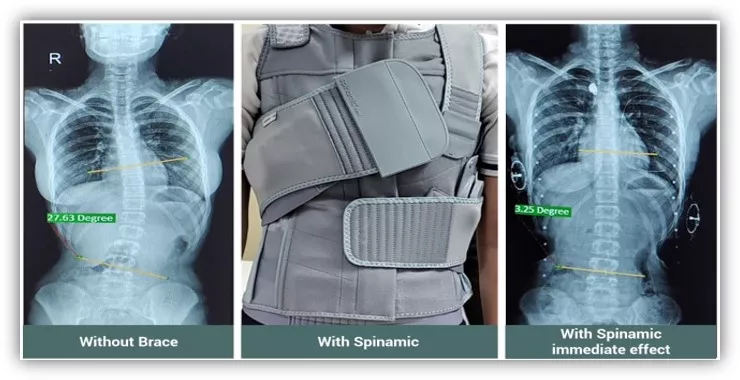
When curvature remains mild to moderate, conservative treatment often proves effective. Initially, structured physiotherapy strengthens core and paraspinal muscles. Additionally, posture correction exercises improve spinal alignment awareness. Consequently, muscular support enhances curve stability. Bracing plays a crucial role in adolescent scoliosis. Moreover, custom orthotic braces prevent curve progression during skeletal growth. Pain management techniques further reduce discomfort in adult patients. Therefore, non-surgical treatment successfully controls many scoliosis cases. Consistent monitoring ensures timely modification of therapy when needed.

Minimally Invasive Scoliosis Correction

In select cases, minimally invasive techniques offer corrective solutions. Unlike traditional open surgery, these approaches require smaller incisions. As a result, muscle trauma reduces significantly. Consequently, recovery time shortens. Dr. Gadkari utilizes precision-guided instrumentation to correct spinal alignment while preserving surrounding tissue. Because minimally invasive methods enhance surgical accuracy, complication rates decrease. Faster mobilization further improves rehabilitation outcomes.

Surgical Treatment for Severe Scoliosis

When curvature exceeds safe thresholds or progresses rapidly, surgical correction becomes necessary. For example, curves greater than 40–50 degrees often require intervention. Dr. Gadkari performs spinal fusion and deformity correction procedures using advanced stabilization systems. During surgery, neuromonitoring protects spinal cord integrity. Consequently, neurological safety remains prioritized. Postoperative rehabilitation restores strength and function gradually. Timely surgical correction prevents long-term structural complications.

Rehabilitation and Post-Treatment Recovery

Successful scoliosis treatment extends beyond correction. Therefore, structured rehabilitation remains essential.

Initially, supervised physiotherapy enhances flexibility and muscle balance. Subsequently, strengthening programs stabilize corrected alignment.

Breathing exercises improve thoracic expansion in affected patients. Moreover, posture training supports long-term structural control.

Regular follow-up imaging monitors spinal stability.

Comprehensive rehabilitation maximizes recovery success.

Lifestyle Modifications for Long-Term Spine Stability

Preventive strategies strengthen treatment outcomes. Firstly, maintaining core strength supports spinal alignment. Secondly, ergonomic awareness reduces strain during daily activities. Additionally, balanced nutrition supports bone health. Weight management further decreases spinal load. By adopting healthy habits, patients reduce progression risk. Long-term spinal stability requires consistent care.

Why Choose Dr. Alok Gadkari for Scoliosis Treatment in Pune?

Expertise significantly influences scoliosis outcomes. Therefore, Dr. Gadkari combines advanced diagnostic accuracy with structured treatment planning. Moreover, he provides complete care from conservative therapy to complex surgical correction. Because he prioritizes patient education, families understand each treatment stage clearly. Advanced surgical precision ensures safe deformity correction. Choosing an experienced scoliosis specialist ensures reliable, structured, and outcome-driven treatment.

Advanced Technology and Precision Infrastructure

Modern scoliosis correction requires advanced systems. Therefore, Dr. Gadkari integrates high-resolution imaging and precision-guided instrumentation. Digital surgical planning improves alignment accuracy. Additionally, intraoperative neuromonitoring enhances safety. Sterile operating environments reduce infection risk. Consequently, recovery remains smooth. Technology-driven precision strengthens both immediate and long-term spinal outcomes.

Book an Appointment

If you notice posture imbalance or spinal asymmetry, early consultation becomes essential. Prompt evaluation improves long-term results significantly.

Dr. Alok Gadkari provides structured scoliosis treatment in Pune using evidence-based protocols and advanced surgical expertise.Schedule a consultation with Dr. Alok Gadkari, and take the first step towards a pain-free life.

📞Call now or book online for a detailed consultation.

Frequently Asked Questions (FAQs)

1. Can scoliosis worsen over time?
Yes, especially during growth spurts; therefore, early monitoring remains critical.

2. Is surgery always required?
No, mild to moderate curves often respond to physiotherapy and bracing.

3. How long does recovery take after surgery?
Recovery varies; however, structured rehabilitation accelerates healing.

4. Can adults develop scoliosis?
Yes, degenerative changes may lead to adult-onset scoliosis.

5. Does early treatment improve results?
Yes, early intervention prevents severe progression and structural complications.

Connect With Dr. Alok Gadkari on Social Media:​​

Call Now Button