
Lumbar Microdiscectomy in Nagpur
Advanced Minimally Invasive Slip Disc Surgery by Dr. Alok Gadkari
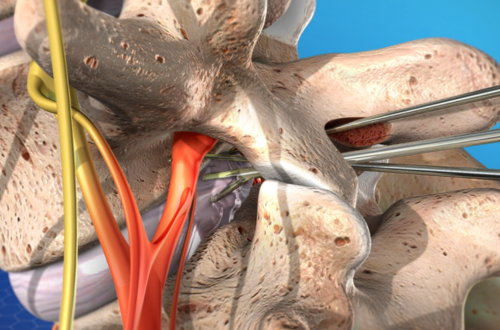
What is Lumbar Microdiscectomy?
Lumbar microdiscectomy is a minimally invasive spine surgery performed to remove the portion of a herniated disc that is pressing on a nerve root in the lower spine.
The surgery is performed using:
Small incision (2–3 cm)
Microscope or surgical loupes
Minimal muscle dissection
Precision instruments
The goal is simple:
Relieve nerve compression and eliminate leg pain (sciatica).
Unlike traditional open surgery, microdiscectomy preserves surrounding muscles and spinal structures, leading to:
Less pain
Smaller scar
Faster healing
Short hospital stay
What is a Lumbar Disc Herniation?
Between each vertebra lies a soft cushion called a disc. It has:
A soft inner core (nucleus pulposus)
A tough outer layer (annulus fibrosus)
When the outer layer tears, the inner material bulges out and presses on nearby nerves. This is called:
Slipped disc
Herniated disc
Prolapsed disc
Disc bulge
When this occurs in the lower back (lumbar spine), it commonly causes:
Severe leg pain (sciatica)
Numbness in leg or foot
Tingling sensation
Weakness in leg muscles
Difficulty walking or standing
If conservative treatment fails, lumbar microdiscectomy becomes the gold standard treatment.
Symptoms That May Require Lumbar Microdiscectomy
You may be a candidate for surgery if you experience:
Persistent sciatica lasting more than 6 weeks
Severe leg pain not improving with medicines
Progressive leg weakness
Loss of bladder or bowel control (emergency)
Difficulty walking due to nerve pain
MRI showing nerve compression
Dr. Alok Gadkari performs detailed clinical evaluation and MRI analysis before recommending surgery.
When is Lumbar Microdiscectomy Recommended?
Most slip discs improve with:
Rest
Physiotherapy
Pain medications
Epidural injections
However, surgery is recommended when:
Pain persists despite 6–8 weeks of treatment
Pain is unbearable and affecting quality of life
There is nerve weakness
Patient cannot perform daily activities
There is risk of permanent nerve damage
Early surgical intervention in appropriate cases provides better outcomes.
How Lumbar Microdiscectomy is Performed
Step-by-Step Procedure
Anesthesia
Surgery is performed under general anesthesia.Small Incision
A 2–3 cm incision is made over the affected spinal level.Muscle Retraction
Muscles are gently separated, not cut.Microscopic Visualization
A surgical microscope provides magnified, clear vision.Removal of Disc Fragment
The herniated disc portion compressing the nerve is removed.Nerve Decompression
The nerve root is freed from pressure.Closure
The incision is closed with minimal stitches.
Total surgery time: 45 minutes to 1.5 hours.
Most patients walk within 6–8 hours.
Benefits of Lumbar Microdiscectomy
Choosing microdiscectomy with Dr. Alok Gadkari offers several advantages:
✔ Immediate relief from leg pain
✔ Small incision
✔ Minimal blood loss
✔ Less muscle damage
✔ Short hospital stay (1–2 days)
✔ Faster recovery
✔ Early return to work
✔ High success rate (90–95%)
Leg pain improves faster than back pain, as the compressed nerve gets instant relief.
Recovery After Lumbar Microdiscectomy
Immediately After Surgery
Walking begins same day
Mild discomfort around incision
Leg pain usually improves immediately
First 2 Weeks
Light activities allowed
Avoid bending and lifting
Regular wound care
4–6 Weeks
Gradual return to routine work
Start guided physiotherapy
Strengthening exercises
3 Months
Resume normal lifestyle
Full recovery in most patients
Proper rehabilitation ensures long-term success and prevents recurrence.
Success Rate of Lumbar Microdiscectomy
Lumbar microdiscectomy has one of the highest success rates in spine surgery.
Clinical studies show:
90–95% relief from leg pain
Significant improvement in mobility
High patient satisfaction
Low complication rate
Early surgery in selected cases improves outcomes significantly.
Lumbar Microdiscectomy vs Open Discectomy
| Feature | Microdiscectomy | Open Surgery |
|---|---|---|
| Incision | Small | Larger |
| Muscle Damage | Minimal | More |
| Recovery | Faster | Slower |
| Pain | Less | More |
| Hospital Stay | Short | Longer |
Who is the Ideal Candidate?
You are a good candidate if:
MRI confirms disc herniation
Leg pain is severe
Conservative treatment failed
There is nerve weakness
Quality of life is affected
Dr. Alok Gadkari performs thorough evaluation before advising surgery.
Long-Term Care After Microdiscectomy
To prevent future disc problems:
Maintain healthy weight
Practice core strengthening exercises
Avoid prolonged sitting
Maintain correct posture
Avoid heavy lifting initially
Follow physiotherapy plan
Spine care is lifelong care.