
Lumbar Spinal Fusion Surgery
Advanced Spine Care by Dr. Alok Gadkari
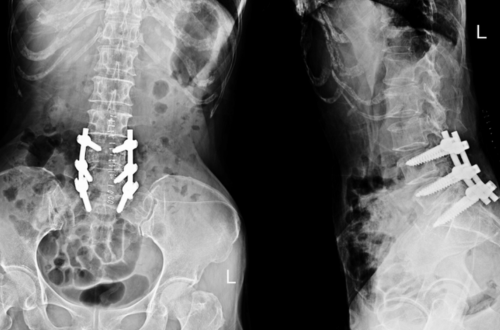
What Is Lumbar Spinal Fusion?
Lumbar spinal fusion is a surgical procedure that permanently connects two or more vertebrae in the lower back (lumbar spine). The goal is to eliminate painful motion between unstable spinal segments and reduce nerve compression.
During the procedure, bone graft material is placed between the affected vertebrae. Over time, the bones heal together into a single solid unit — stabilizing the spine and reducing pain.
This surgery is commonly recommended when spinal instability, degeneration, or deformity causes persistent symptoms that do not respond to non-surgical treatments.
Understanding the Lumbar Spine
The lumbar spine consists of five vertebrae (L1 to L5) located in the lower back. These vertebrae:
Support most of the body’s weight
Allow bending, twisting, and movement
Protect important spinal nerves
When discs degenerate, vertebrae slip, or joints become unstable, it can lead to:
Severe lower back pain
Leg pain (sciatica)
Numbness or tingling
Weakness in legs
Difficulty walking or standing
Lumbar spinal fusion helps stabilize these unstable segments.
Conditions Treated with Lumbar Spinal Fusion
Dr. Alok Gadkari recommends lumbar fusion surgery for patients suffering from:
1. Degenerative Disc Disease
Age-related wear and tear of spinal discs causing chronic back pain.
2. Spondylolisthesis
A condition where one vertebra slips over another, leading to instability and nerve compression.
3. Spinal Stenosis with Instability
Narrowing of the spinal canal combined with abnormal movement between vertebrae.
4. Recurrent Disc Herniation
Repeated disc problems that require stabilization.
5. Spinal Deformities
Such as scoliosis or abnormal curvature affecting the lower spine.
6. Spinal Fractures or Trauma
Injury causing instability in the lumbar spine.
7. Failed Back Surgery Syndrome
Persistent pain after previous spine surgery that requires structural stabilization.
When Is Lumbar Fusion Surgery Recommended?
Lumbar spinal fusion is considered when:
Pain persists for more than 3–6 months
Conservative treatment fails
MRI or CT scans show instability
There is nerve compression with weakness
Back pain severely limits daily activities
Dr. Alok Gadkari carefully evaluates each patient before recommending surgery. Not every back pain requires fusion — proper diagnosis is essential.
Types of Lumbar Spinal Fusion Techniques
Modern spine surgery offers multiple approaches depending on the condition and patient needs.
1. Posterior Lumbar Interbody Fusion (PLIF)
Performed from the back, where disc material is removed and replaced with bone graft and implants.
2. Transforaminal Lumbar Interbody Fusion (TLIF)
A minimally invasive variation that reduces muscle damage.
3. Anterior Lumbar Interbody Fusion (ALIF)
Approach through the abdomen for better disc space access.
4. Lateral Lumbar Interbody Fusion (LLIF)
Access from the side of the body with minimal disruption.
5. Minimally Invasive Lumbar Fusion
Uses smaller incisions, specialized instruments, and faster recovery protocols.
Dr. Alok Gadkari uses advanced surgical planning to select the safest and most effective technique for each patient.
How Lumbar Spinal Fusion Surgery Is Performed
Step 1: Anesthesia
The procedure is performed under general anesthesia.
Step 2: Surgical Approach
The surgeon makes a precise incision based on the chosen technique.
Step 3: Removal of Damaged Disc
The diseased disc or unstable joint is removed.
Step 4: Bone Graft Placement
Bone graft material (from patient or synthetic) is placed between vertebrae.
Step 5: Instrumentation
Metal screws and rods are inserted to stabilize the spine while fusion occurs.
Step 6: Closure
Incision is closed carefully to promote healing.
Over several months, the bone graft fuses the vertebrae into a single solid structure.
Benefits of Lumbar Spinal Fusion
Patients undergoing lumbar fusion with Dr. Alok Gadkari may experience:
Significant reduction in back pain
Relief from nerve compression
Improved spinal stability
Better posture
Increased mobility
Enhanced quality of life
When performed correctly, lumbar fusion provides long-term stability and durable results.
Advantages of Modern Minimally Invasive Fusion
Compared to traditional open surgery, modern techniques offer:
Smaller incisions
Less muscle damage
Reduced blood loss
Shorter hospital stay
Faster recovery
Lower infection risk
Less post-operative pain
Dr. Alok Gadkari incorporates advanced minimally invasive technology whenever suitable.
Recovery After Lumbar Spinal Fusion
Recovery varies depending on the patient’s condition and type of surgery.
Immediate Post-Surgery
Hospital stay: 2–5 days
Walking encouraged within 24 hours
Pain managed with medications
First 6 Weeks
Light activity allowed
Avoid heavy lifting
Begin guided physiotherapy
3 to 6 Months
Gradual return to normal activities
Bone fusion continues to strengthen
6 to 12 Months
Complete fusion occurs
Most patients return to full daily routine
Dr. Alok Gadkari provides a personalized rehabilitation plan to ensure optimal healing.
Success Rate of Lumbar Spinal Fusion
Lumbar spinal fusion has a high success rate, especially when performed for appropriate indications such as instability or spondylolisthesis.
Studies show:
70–90% of patients report significant pain relief
Improved function and mobility
High patient satisfaction rates
Proper diagnosis, surgical precision, and rehabilitation play a key role in successful outcomes.
Who Is Not a Good Candidate?
Lumbar spinal fusion may not be ideal for:
Mild back pain without instability
Patients who respond well to conservative care
Severe uncontrolled medical conditions
Heavy smokers (higher non-union risk)
Dr. Alok Gadkari ensures only appropriate candidates undergo surgery.